Aruba vs Curacao vs Bonaire: ABC Islands Beach Comparison
Table of Contents
Prices in this guide are approximate and change often. Check with the hotel, airline or operator before you book.
Three Islands, Three Completely Different Beach Experiences
Aruba, Bonaire, and Curacao sit in a line off the coast of Venezuela, outside the hurricane belt, with year-round sunshine and warm water. They share Dutch colonial history, similar arid landscapes, and Papiamento as a local language. Beyond that, the similarities get thin. Each island attracts a fundamentally different type of beach traveler, and picking the wrong one means spending a week somewhere that doesn't match what you actually want.
Aruba is the resort island — wide white-sand beaches, high-rise hotels, organized water sports, and a tourism infrastructure built for volume. Curacao is the cultural island — a UNESCO World Heritage capital city, diverse beaches ranging from developed to hidden, and a more independent travel style. Bonaire is the diving island — a marine park that encircles the entire coast, minimal development, and beaches that serve primarily as entry points to the underwater world rather than destinations in themselves.
Aruba's Beaches: Built for Sunbathing
Eagle Beach
Eagle Beach consistently ranks in the top 10 beaches in the Caribbean on TripAdvisor and similar lists, and for once the rankings aren't misleading. The beach is genuinely excellent — a wide strip of fine white sand stretching about 2 miles along Aruba's low-rise hotel zone. The water is calm, clear, and warm (82-84°F year-round). Two photogenic fofoti (divi-divi) trees near the Amsterdam Manor provide the iconic Aruba photo op.
What makes Eagle Beach work is its width. Even at peak season (December-April), the sand absorbs the crowd. You can find space. The beach is public and free — you don't need to be at a hotel to use it. Palapas (thatched shade huts) are first-come, first-served and go early. The water is shallow for 50+ yards, making it safe for children and non-swimmers.
Palm Beach
Palm Beach runs along the high-rise hotel strip — the Riu, Marriott, Hyatt Regency, and Holiday Inn line the sand here. The beach is narrower than Eagle Beach and more developed, with jet ski rentals, parasailing operators, and floating bars offshore. The water is equally calm. This is the beach for people who want activities, restaurants within stumbling distance, and a constant supply of piña coladas delivered to their lounger.
Baby Beach
At Aruba's southeastern tip, Baby Beach is a shallow, enclosed lagoon protected by a natural reef barrier. The water rarely exceeds 3 feet deep for the first 100 yards, making it the safest swimming beach on the island for small children. The trade-off: it's a 40-minute drive from the hotel zone, and the beach has limited shade and basic facilities (a snack bar, restrooms, and a few rental chairs).
Aruba's Weakness
Aruba's beaches are optimized for lying on sand and wading into calm water. Snorkeling directly from the beach is mediocre — the sandy bottom and lack of nearby reef means you'll see scattered fish but no coral formations. For snorkeling, you need a boat trip to Arashi Reef or the Antilla shipwreck ($45-65 per person). The island also has almost no natural shade — bring or rent an umbrella.
Curacao's Beaches: Variety and Discovery
Playa Kenepa (Grote Knip)
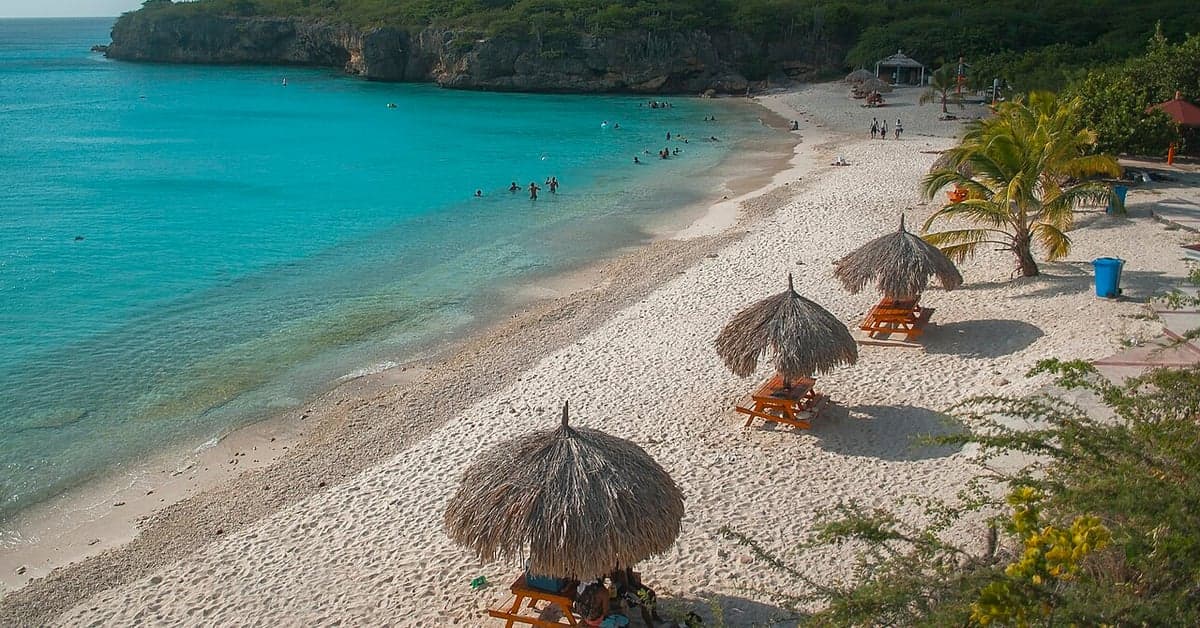
Grote Knip is Curacao's headline beach — a steep cliff descent leads to a crescent of white sand backed by rocky walls, with turquoise water that photographs almost unreasonably well. The beach is small enough to feel intimate and large enough to hold a crowd. The water is calm on most days, with decent snorkeling along the rocky edges where parrotfish and sergeant majors congregate. No entrance fee, limited facilities (a food truck at the top of the stairs, portable toilets).
Cas Abao Beach
Cas Abao charges a $6 entrance fee and uses that money to maintain the best facilities of any beach on the island — lounge chairs ($5), shade palapas, a restaurant with decent food and cold Amstel Brights, showers, and restrooms. The beach faces west, catching sunset. The snorkeling here is strong — swim 50 yards out and you'll find healthy coral formations with blue tang, yellowtail snapper, and the occasional sea turtle.
Playa Porto Mari
Porto Mari has something no other beach in the ABCs offers: a double reef accessible directly from shore. Wade in from the beach, swim past the first shallow reef (15-20 feet of water), cross a sand channel, and reach a second reef wall that drops to 30+ feet with larger marine life including reef sharks and eagle rays. The beach charges $3 entry with chair rentals available. A dive shop on-site rents snorkel gear ($10) and runs guided dives.
Curacao's Advantage
Curacao has 35+ distinct beaches, each with different characteristics. Some are developed resort beaches (Mambo Beach, Blue Bay). Some are hidden coves requiring dirt-road drives and cliff scrambles (Playa Jeremi, Playa Lagun). Some are urban (Pietermaai district has waterfront swimming platforms). A week in Curacao means visiting a different beach every day. A week in Aruba means choosing between two or three main options. For beach variety, Curacao wins by a wide margin.
Curacao's Weakness
You need a rental car. Period. The best beaches are scattered across the island's western coast, 20-60 minutes from Willemstad. Public transportation is unreliable for beach access. Rental cars run $30-50 per day. Without one, you're limited to the Mambo Beach area in Willemstad, which is fine but not why you came to Curacao.
Bonaire's Beaches: Gateways to the Reef
The Entire Coastline Is a Marine Park
Bonaire's coast has been a protected marine park since 1979. The reef starts at the shoreline in many locations, meaning world-class snorkeling and diving is accessible by walking into the water from shore. The island has 86 marked dive/snorkel sites, most accessible from the road that rings the coast. You buy a marine park tag ($40/year for divers, $25/year for snorkelers) and then access any site at any time.
Te Amo Beach
Near the airport, Te Amo is one of Bonaire's few beaches that functions as an actual beach — sand to lie on, shade trees, calm water. The snorkeling is excellent right from shore, with healthy elkhorn coral in shallow water. It's a 5-minute drive from most hotels.
1000 Steps Beach
Named for the limestone staircase carved into the cliff (there are actually about 67 steps), 1000 Steps is a narrow sand beach backed by a dramatic cliff face. The real draw is underwater — the reef starts immediately from shore with a wall that drops to 100+ feet. Visibility regularly exceeds 100 feet. This is a top-tier snorkel and dive site that happens to have a beach.
Lac Bay
A shallow, mangrove-lined bay on Bonaire's windward side, Lac Bay is one of the world's best windsurfing and kiteboarding spots. The water is knee-deep for hundreds of yards, the wind is consistent (15-25 knots), and several rental shops line the beach. The sandy beach at Sorobon within Lac Bay has a beach bar and lounge chairs. Swimming and sunbathing are secondary activities here — this is an action sports beach.
Bonaire's Reality Check
If your primary goal is lying on beautiful sand with a drink in hand, Bonaire is the wrong island. Most "beaches" on Bonaire are rocky entry points — you clamber over coral rubble and ironshore to reach the water. The underwater world is spectacular, but the above-water beach experience is limited. Bonaire has maybe 5-6 actual sand beaches on the entire island. The island also has minimal nightlife, limited restaurants, and a quiet, almost sleepy atmosphere.
Cost Comparison
Flights
Aruba has the most flight options from the US — direct flights from Miami, New York (JFK), Atlanta, Houston, and several other cities on American, JetBlue, Delta, Spirit, and United. Round-trip fares run $250-500 from the East Coast. Curacao has fewer direct routes — JetBlue from JFK and Fort Lauderdale, American from Miami — with fares of $300-550. Bonaire has the fewest options — a KLM flight via Amsterdam or connections through Curacao or Aruba on local carriers. Expect $400-700 from the US.
Hotels
Aruba's high-rise hotel strip offers the widest range: budget hotels from $120/night, mid-range resorts at $200-400, and luxury properties at $500+. Curacao's hotel market is smaller but competitive — boutique hotels in Pietermaai from $100, resort properties at $150-350, and private villa rentals that offer value for groups. Bonaire has limited inventory — most visitors stay at dive-focused resorts ($150-300/night) or rental apartments ($80-150). Compare hotel options and rates before booking.
Food and Drink
Aruba is the most expensive for dining — expect $15-25 for lunch and $30-60 for dinner at sit-down restaurants, with tourist-zone markups. Curacao is 15-20% cheaper than Aruba, with local snack bars ("snèks") serving filling meals for $5-10. Bonaire falls between the two, with a smaller restaurant scene and prices similar to Curacao's.
Which Island to Pick
Choose Aruba If...
You want a straightforward beach vacation with reliable weather, easy logistics, wide sand, calm water, and resort-level service. You don't need to explore — you need to relax. Aruba delivers a consistent, predictable Caribbean beach experience with minimal friction. It's the island for people who don't want to think about where to eat, how to get to the beach, or what to do when it rains (it almost never rains).
Choose Curacao If...
You want to combine beach time with cultural exploration, eat at local restaurants, rent a car and discover hidden coves, and see a Caribbean island that doesn't feel like a resort campus. Curacao's Willemstad is a genuine city with architecture, history, and street life. The beaches are more diverse and less developed. This is the island for travelers who get bored lying on the same beach for a week.
Choose Bonaire If...
You dive or snorkel seriously and the underwater world is your priority. Bonaire's shore diving is the best in the Caribbean — accessible, affordable, and protected. The island attracts a niche audience of marine enthusiasts who return year after year. If you don't dive or snorkel, Bonaire has limited appeal. The beaches are few, the nightlife is quiet, and the island runs on reef love.
Frequently Asked Questions
Which ABC island has the best beaches?
Aruba has the best traditional beaches — wide white sand, calm water, and resort-level service at Eagle Beach and Palm Beach. Curacao has the most variety with 35+ beaches ranging from developed to hidden coves. Bonaire has limited sand beaches but offers the best direct-from-shore snorkeling and diving in the Caribbean.
Is Aruba or Curacao cheaper for a vacation?
Curacao is 15-25% cheaper overall. Hotels average $100-350 vs Aruba's $120-500+. Dining at local snack bars in Curacao costs $5-10 vs $15-25 for equivalent meals in Aruba's tourist zones. Flights to Curacao may cost $50-100 more due to fewer direct routes, but ground costs are lower.
Do you need a rental car on the ABC islands?
Curacao requires a rental car ($30-50/day) to access its scattered beaches. Bonaire benefits from one for shore diving access. Aruba is the only island where you can skip a rental — the hotel zone is walkable to Eagle Beach and Palm Beach, with taxis and shuttles covering other destinations.
Which ABC island is best for snorkeling?
Bonaire is the undisputed snorkeling champion with 86 marked shore-access sites and a protected marine park surrounding the entire island. Curacao's Playa Porto Mari and Cas Abao offer strong shore snorkeling. Aruba's shore snorkeling is mediocre — boat trips to Arashi Reef or the Antilla wreck ($45-65) are needed for good underwater experiences.
Are the ABC islands outside the hurricane belt?
Yes, Aruba, Bonaire, and Curacao sit south of the hurricane belt at about 12°N latitude, roughly 50 miles north of Venezuela. Direct hurricane hits are extremely rare — the last significant impact was Hurricane Felix in 2007, which passed nearby but caused minimal damage. This makes the ABCs reliable year-round destinations.
Which ABC island is best for families?
Aruba is the best choice for families. Eagle Beach has shallow, calm water and wide sand. Baby Beach is a natural lagoon rarely exceeding 3 feet deep. The hotel zone has family-friendly resorts with kids' programs. Aruba's tourism infrastructure makes logistics easy with English widely spoken and familiar restaurant chains available.
How do you get between the ABC islands?
Divi Divi Air and EZ Air operate small propeller planes between the three islands, with flights taking 30-50 minutes and costing $80-150 one way. There is no ferry service between the islands. Flying between Aruba and Curacao takes about 30 minutes; Bonaire-Curacao is about 35 minutes.