Antigua and Barbuda: 365 Beaches for Every Day of the Year
Table of Contents
Prices in this guide are approximate and change often. Check with the hotel, airline or operator before you book.
The 365-Beach Claim: How Real Is It?
Antigua's tourism board has long marketed the island as having "365 beaches — one for every day of the year." The actual number is debatable and depends heavily on how you define a beach. If every small strip of sand between rocks counts, the number might be higher. None of that matters much in practice, because even the conservative count gives you more beaches than you could visit on any reasonable trip.
What does matter is the variety. Antigua's 108-square-mile landmass is ringed by coral reefs that create calm, protected waters on the western and northern shores, while the east and south coasts get more wave action from the Atlantic trade winds. The island's beaches range from busy resort strips with full bar service to completely deserted crescents of white sand reachable only by boat or a dirt track through dry scrubland.
Barbuda, Antigua's sister island 27 miles to the north, is flatter, drier, and home to fewer than 2,000 people. Its western shore — particularly the 17-mile stretch of pink-tinged sand from Palmetto Point south — is one of the most spectacular and least-visited beaches in the entire Caribbean. Getting there requires a short flight or a 90-minute ferry, and the effort is absolutely worth it.
The North Coast: Dickenson Bay and Beyond
Dickenson Bay
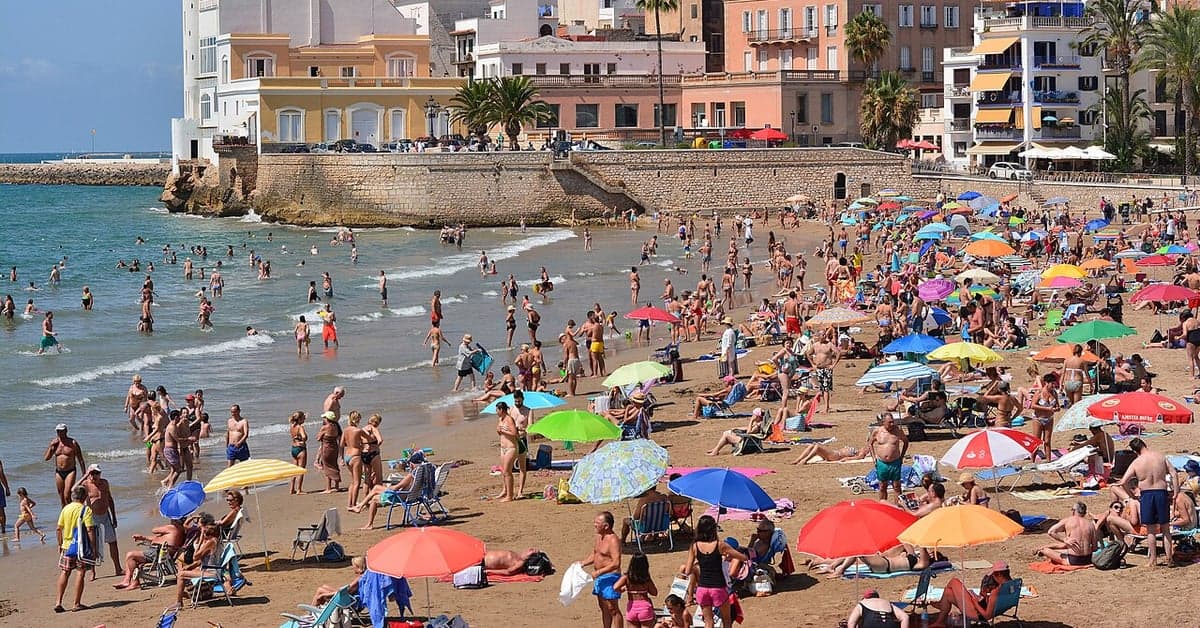
Dickenson Bay is Antigua's busiest beach and the default destination for cruise ship visitors and resort guests. A long crescent of white sand backed by the Sandals, Rex Halcyon, and Siboney Beach Club resorts, it has all the amenities — sunbed rentals (US$10-15), beach bars, water sports rentals, and food vendors. The water is calm and clear, protected by a reef offshore.
It is a perfectly fine beach, but it is also the most crowded on the island, especially on days when multiple cruise ships dock in St. John's (check the port schedule at antiguacruises.com to avoid peak days). If you want a Caribbean beach with zero friction, Dickenson Bay delivers. If you want anything resembling solitude, keep driving.
Jabberwock Beach
On the northeast coast near the airport, Jabberwock is where Antigua's kiteboarding scene lives. Consistent trade winds blow onshore from December through July, creating ideal conditions for kiting and windsurfing. Kite Antigua operates a school here with lessons starting at US$80 for a 2-hour introductory session. The beach itself is wide, with coarser sand than the west coast beaches and more wave action. Not a lounging beach — a doing beach.
The West Coast: Calm Water and Sunset Views
Jolly Beach
Jolly Beach is one of the longest on the island — roughly a mile of white sand curving along Lignum Vitae Bay. The southern end is occupied by the Jolly Beach Resort (one of Antigua's few all-inclusive options), while the northern section remains public and relatively quiet on weekdays. The water is shallow and calm, making it a solid choice for families with small children. Dennis's Cocktail Bar and Restaurant at the north end serves rum punch (US$6) and grilled lobster (US$35 in season) at plastic tables on the sand.
Darkwood Beach
South of Jolly Beach, Darkwood is the west coast beach that feels the least developed. A straight stretch of soft white sand backed by sea grapes and palm trees, with views of Montserrat's volcanic peak on clear days. There is one beach bar — OJ's, which serves cold Wadadli beer (Antigua's local brew, US$4) and excellent grilled fish — and nothing else. No resorts, no vendors, no jet skis. The water is that particular shade of impossible turquoise that the Caribbean does better than anywhere.
Ffryes Beach
Just south of Darkwood, Ffryes (the double-f is correct) is similarly gorgeous and slightly more secluded. The sand is powder-fine, the water is calm and clear, and Dennis's Beach Bar serves lunch and drinks. On weekdays outside of high season, you might share this beach with fewer than a dozen people. Sunset from Ffryes, with Montserrat silhouetted 30 miles to the southwest, is spectacular.
The South Coast: Half Moon Bay and Beyond
Half Moon Bay
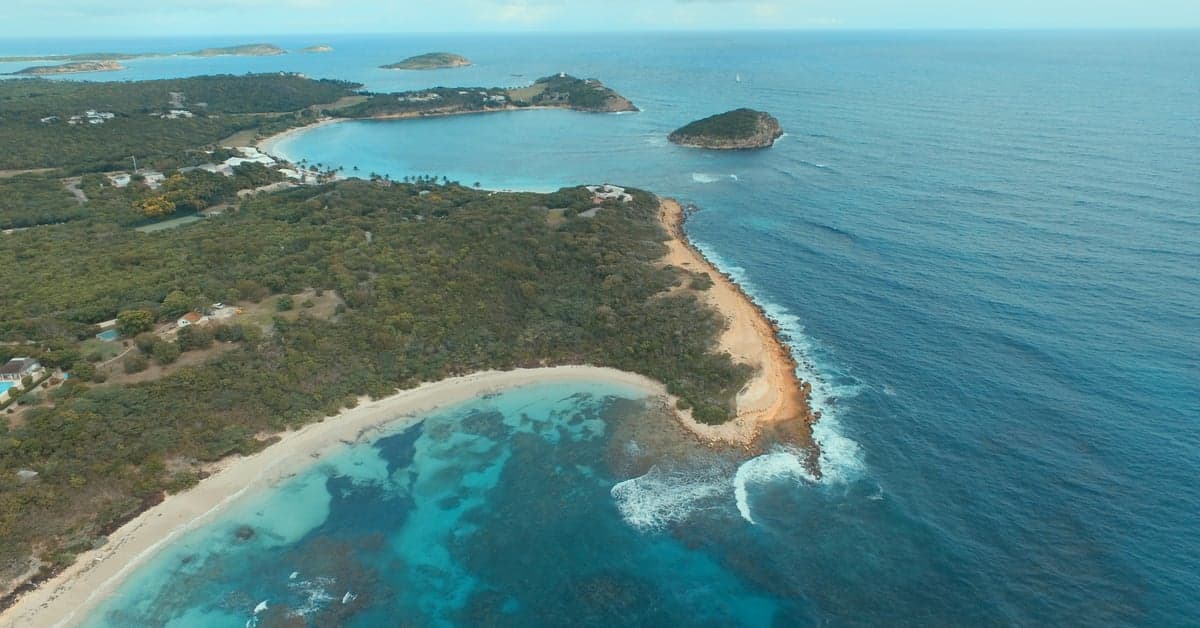
If Antigua has a single best beach, this is the leading candidate. A perfect crescent of white sand stretching half a mile between two rocky headlands, with Atlantic swells rolling in to create actual waves — a rarity on Antigua's mostly reef-protected coastline. The eastern end is calmer; the western end gets more surf. There is no development directly on the beach (the old Half Moon Bay Hotel closed years ago and its ruins sit behind the tree line), just a small snack bar that operates sporadically.
Half Moon Bay is a national park, which means it stays undeveloped. The downside is that facilities are minimal — bring your own water and food. The drive from St. John's takes about 45 minutes on roads that range from decent to potholed. The beauty is extraordinary and worth every bump.
Rendezvous Bay
Antigua's most remote beach on the main island, Rendezvous Bay is reachable only by boat, kayak, or a 30-minute hike along a coastal trail from Falmouth Harbour. The trail is not well-marked and involves some scrambling over rocks, which keeps the crowds away. The beach itself is a wide, sheltered cove with pristine snorkeling along the rocky edges. Bring everything you need — there is nothing here but sand, sea, and bush.
English Harbour and Shirley Heights
English Harbour is less about beaches and more about history and atmosphere. Nelson's Dockyard, the only continuously working Georgian dockyard in the world, was the base for the British Royal Navy's Caribbean fleet in the 18th century. The restored buildings now house restaurants, shops, and a small museum (entry US$8, included in the national parks pass).
Pigeon Point Beach, just outside the dockyard entrance, is a calm, reef-protected stretch good for swimming and snorkeling. Galleon Beach, across the harbor mouth, is prettier and less visited, accessible by water taxi (US$7 round trip) from the dockyard.
Every Sunday afternoon, Shirley Heights Lookout — a restored military fortification on the hill above English Harbour — hosts a barbecue and steel band party from 4 PM until sunset. It is touristy, yes, but the ribs are good, the rum punch flows, and the panoramic view of English Harbour, Falmouth Harbour, and the southern coast at golden hour is genuinely breathtaking. Entry is US$10 including a welcome drink.
Barbuda: The Main Event
Getting There
Barbuda Express ferry runs daily from St. John's to Codrington, Barbuda — 90 minutes, US$60 round trip. SVG Air and ABM Air offer short flights (15 minutes) for US$100-140 round trip. Day trips are possible but an overnight stay lets you experience the emptiness of the beaches at sunrise, which is the whole point.
Palmetto Point and 17 Mile Beach
The western shore of Barbuda is a continuous stretch of pink-white sand that runs for roughly 17 miles with virtually no development. The pink tint comes from crushed foraminifera — tiny marine organisms with pink shells that wash ashore and mix with the white coral sand. The color is most visible when the sand is wet, at the tideline.
On any given day, you might be the only person on a half-mile stretch of this beach. The water is shallow for hundreds of meters offshore, crystal-clear, and warm year-round (78-84°F). There are no beach bars, no sunbed rentals, no anything. Bring water, food, sunscreen, and an umbrella. A taxi from Codrington to the beach area costs about US$20-30.
The Frigate Bird Sanctuary
Barbuda's lagoon hosts one of the largest frigatebird colonies in the Caribbean, at its busiest during the nesting season. Boat tours through the mangroves to observe the males displaying their inflated red throat pouches cost US$40-50 per person. The guides are local fishermen who know every nesting site. It is a memorable side trip between beach sessions.
Practical Information
Getting Around Antigua
Rent a car. Public buses exist but are unreliable and do not serve most beaches. Rental cars start at US$45-55 per day, driving is on the left (British colonial legacy), and the roads range from good to terrible. A 4WD is not strictly necessary but helps on the rougher coastal tracks. Gas stations are mostly in St. John's and the main towns.
Water Temperature and Weather
Water temperature ranges from 78°F in February to 84°F in September. Air temperature is remarkably consistent year-round: 77-88°F. The dry season (December through April) is the most pleasant, with lower humidity and reliable trade winds. Hurricane season runs June through November, with the highest risk in August-October. Antigua sits far enough east that it misses many storms, but not all — Hurricane Irma devastated Barbuda in September 2017.
Budget
Antigua is not cheap by Caribbean standards. A beer at a beach bar costs US$4-6, a basic lunch US$15-25, and a mid-range hotel room US$150-250 in high season. The best value is renting a villa or apartment and cooking some meals with local produce from the St. John's market. Fresh fish from the Barbuda fishermen in the market runs US$5-8 per pound.
Frequently Asked Questions
Does Antigua really have 365 beaches?
The 365 number is a marketing claim that depends on how loosely you define a beach. If every small strip of sand between rocks counts, the number might exceed 365. Many of them are small coves rather than long beaches. Either way, Antigua has far more beaches than you could visit on a single trip.
What is the best beach in Antigua?
Half Moon Bay on the south coast is widely considered the most beautiful — a perfect crescent of white sand between rocky headlands with Atlantic waves rolling in. For calm water and easy access, Darkwood Beach and Ffryes Beach on the west coast are excellent. For sheer spectacle, Barbuda's 17 Mile Beach of pink-tinged sand is in another league entirely.
How do you get from Antigua to Barbuda?
The Barbuda Express ferry runs daily from St. John's to Codrington, taking about 90 minutes and costing US$60 round trip. SVG Air and ABM Air offer 15-minute flights for US$100-140 round trip. Day trips are possible by ferry, departing early morning and returning late afternoon.
Is Antigua good for snorkeling?
Yes, the coral reefs that ring most of the island create excellent snorkeling conditions. The best spots include the reefs off Rendezvous Bay, the rocky edges of Half Moon Bay, and Pigeon Point near English Harbour. Cades Reef on the southwest coast is the largest reef system and is accessible by boat tour from Jolly Harbour for about US$50-70 per person.
What is the best time to visit Antigua?
December through April is the dry season with lower humidity, consistent trade winds, and comfortable 77-85°F temperatures. Water temperature ranges from 78-84°F year-round. The period from mid-December through mid-January is peak season with the highest prices. April and May offer a good value sweet spot with warm weather and lower rates.
Do you need a car in Antigua?
A rental car is strongly recommended if you want to explore beyond your resort. Public buses exist but are unreliable and do not serve most beaches. Rentals start at US$45-55 per day, driving is on the left, and a temporary Antiguan license (US$20) is required. Roads to remote beaches can be rough, so a vehicle with decent clearance helps.
Why is Barbuda's sand pink?
The pink tint comes from crushed foraminifera — tiny marine organisms with pink-colored shells that wash ashore and mix with the white coral sand. The color is most visible when the sand is wet at the waterline. Barbuda's 17 Mile Beach on the western shore has the most consistently pink sand, though the intensity varies by section and time of day.