Table of Contents
What Makes a Hotel "Boutique"
The word "boutique" gets slapped on everything from a 12-room converted farmhouse to a 200-room Marriott rebrand. For this list, the definition is strict: under 50 rooms, independently owned or part of a small collection, with a design point of view that goes beyond "we hired a decorator." These are hotels where the owner or architect made specific choices about materials, layout, and atmosphere — places that couldn't exist anywhere else.
The price cap is EUR 400/night for a standard double in high season. These are not cheap stays, but they sit below the Aman-Belmond-Four Seasons tier where EUR 800 is the entry point. Every hotel on this list offers something that a large resort structurally cannot: personal attention, architectural coherence, and a sense that you're staying somewhere, not just at somewhere.
Spain
Marbella Club, Marbella, Costa del Sol
The Marbella Club was founded in 1954 by Prince Alfonso von Hohenlohe, who bought a seaside estate and started inviting aristocratic friends to stay. The guest list over the decades reads like a mid-century gossip column: the Rothschilds, Ava Gardner, Audrey Hepburn, the Saudi royal family. Today, the property has 37 rooms, 78 suites, and 14 villas spread through subtropical gardens between the coastal road and a private beach.
The hotel straddles the boutique definition given its total key count, but the room configuration — many suites are in standalone garden bungalows — gives it a small-property feel. Standard doubles start at EUR 350/night in summer. The beach club, MC Beach, operates a restaurant and organized sunbed service on the sand. The spa uses thalassotherapy and local products including olive oil and sea salt from Andalusia.
Marbella's old town, with its Plaza de los Naranjos and tapas bars, is a 10-minute drive. Puerto Banus — the superyacht marina and designer shopping strip — is 8 minutes in the other direction. Malaga airport is 45 minutes away.
Son Brull Hotel and Spa, Pollenca, Mallorca
Son Brull is a converted 12th-century Jesuit monastery on a hillside above Pollenca in Mallorca's northeast. The 23 rooms occupy the restored stone building, with additions designed by Mallorcan firm Estudi d'Arquitectura. The aesthetic is restrained Mediterranean: whitewashed walls, terracotta floors, linen curtains, and a deliberate absence of pattern. Rooms start at EUR 250/night, suites with private terraces at EUR 380.
There's no beach on-site — Son Brull sits 15 minutes inland. The hotel runs a shuttle to Playa de Formentor, one of Mallorca's most celebrated beaches: a pine-backed strip of fine sand on a protected bay with water clear enough to read through. Alternatively, the Cala Sant Vicenc beaches are 10 minutes away — three small coves at the base of a limestone valley.
The restaurant, 365, earned a Michelin recommendation for modern Mallorcan cuisine: slow-cooked suckling pig, tumbet with local vegetables, and desserts built around Mallorcan almonds and carob. The wine list focuses on Mallorcan producers — the island's wine scene has improved dramatically over the past decade, with Binissalem DO wines now competitive with mainland Spanish labels. The spa uses grape-seed and olive-based treatments from local producer Hammam Al Andalus.
Portugal
Memmo Baleeira, Sagres, Algarve
Sagres occupies the southwestern tip of continental Europe — a windswept headland where Henry the Navigator built his school of exploration in the 15th century. Memmo Baleeira sits above the fishing harbor with 144 rooms — technically over the 50-room cap, but the hotel's design identity and location earn its place. The architecture is brutalist-meets-nautical: raw concrete, teak decking, maritime blue accents, and floor-to-ceiling glass framing the Atlantic.
Rooms start at EUR 150/night in shoulder season, EUR 280 in July-August. The rooftop pool overlooks the harbor where fishermen unload sardines each morning. The hotel doesn't have a private beach, but Praia da Mareta — a sheltered cove of golden sand five minutes' walk away — functions as one. Praia do Beliche, a more dramatic beach between cliffs, is 3 minutes by car.
Sagres is a surf town at heart. The exposed Atlantic coast produces consistent waves from September through May, with Praia do Tonel and Praia do Castelejo as the primary breaks. The Memmo has a surf concierge who arranges lessons (EUR 40/hour) and equipment rental. The restaurant serves Algarve seafood — cataplana stews, grilled percebes (goose barnacles), and the local specialty of tuna steak from the nearby Almadraba fish traps.
France
Lily of the Valley, La Croix-Valmer, French Riviera
Lily of the Valley opened in 2019 on a hillside above Gigaro Beach, between Saint-Tropez and Cavalaire-sur-Mer. Designed by Philippe Starck, the 44-room hotel is built into the slope of Cap Lardier, a protected nature reserve. The design vocabulary is Starck at his most restrained: pale wood, raw linen, wicker, and large windows that frame the Mediterranean and the Maures massif behind.
The hotel's focus is wellness — a 2,000-square-meter spa with outdoor pool, fitness center, yoga studio, and a treatment program developed with cosmetics brand Biologique Recherche. But it's not a clinical retreat. The restaurant, Colette, serves seasonal Provencal food (bouillabaisse, ratatouille, tarte tropezienne) on a terrace with sea views. Dinner runs EUR 50-80/person.
The path to Gigaro Beach winds through the Cap Lardier nature reserve — a 10-minute walk through pine forest and maquis shrubland. The beach is public but rarely crowded, with fine sand and calm water. Rooms start at EUR 300/night, climbing to EUR 500+ in July-August. Saint-Tropez is 20 minutes by car; Nice airport is 90 minutes.
Hotel and Spa des Pecheurs, Cavallo Island, Corsica
Des Pecheurs returns on this list (it also appeared in the adults-only roundup) because it genuinely fits both categories. The 50-room hotel on the private island of Cavallo, between Corsica and Sardinia, occupies a converted fishing village accessible only by boat from Bonifacio (30 minutes). No cars, no roads, no mainland noise.
Rooms range from EUR 300 to EUR 700/night depending on season and category. The restaurant cooks with fish landed by local boats that morning — whole sea bream roasted in a salt crust, spaghetti with sea urchin, grilled lobster. The beach, Plage de Paragan, is a small cove of white sand with crystalline water that recalls the Caribbean more than the Mediterranean.
Cavallo has a complicated history — it was developed in the 1970s as a private island for the wealthy, with villas owned by various international magnates. Des Pecheurs is the only hotel, and the island's infrastructure remains minimal. That minimalism is the appeal: nothing to do except swim, eat, sleep, and read.
Italy
La Peschiera, Monopoli, Puglia
La Peschiera occupies a 16th-century fish farm (peschiera) on a rocky stretch of Puglia's Adriatic coast, 3 kilometers south of Monopoli. The conversion retained the original stone walls, fishing channels, and seawater pools while adding 34 rooms, a restaurant, and a spa. The architecture firm preserved the building's working-port character — rough limestone, iron fixtures, blue-painted wooden doors — rather than polishing it into generic luxury.
Swimming happens in the natural rock pools that once held fish, in the seawater infinity pool built into the coastline, or in the Adriatic itself via ladders cut into the rock. There's no sandy beach, which will disappoint travelers with young children. But the water is transparent and the rocky coast supports excellent snorkeling — octopus, sea bream, and morays live in the crevices.
Rooms start at EUR 280/night. The restaurant focuses on Pugliese ingredients: burrata from Andria (the best in the world comes from a 40-minute drive away), orecchiette with cime di rapa, raw red prawns from Gallipoli. Monopoli's old town — whitewashed buildings, a Norman castle, a harbor lined with fishing boats — is a 5-minute drive or a 15-minute walk along the coast path.
Menorca
Fontenille Menorca, Son Saura
Fontenille is a French hotel group that converts agricultural estates into small hotels. Their Menorca property occupies a 200-year-old finca (farmhouse) on a 200-hectare rural estate in the center of the island, surrounded by dry stone walls, wild olive trees, and grazing Menorcan cattle.
The 30 rooms are split between the main house and converted outbuildings. Interiors use local stone, reclaimed wood, and natural fabrics — the style is "wealthy farmer" rather than "boutique hotel." Rooms start at EUR 250/night including breakfast. The farm produces its own cheese, honey, and vegetables, which feed the restaurant. A tasting dinner with wine pairing runs EUR 65.
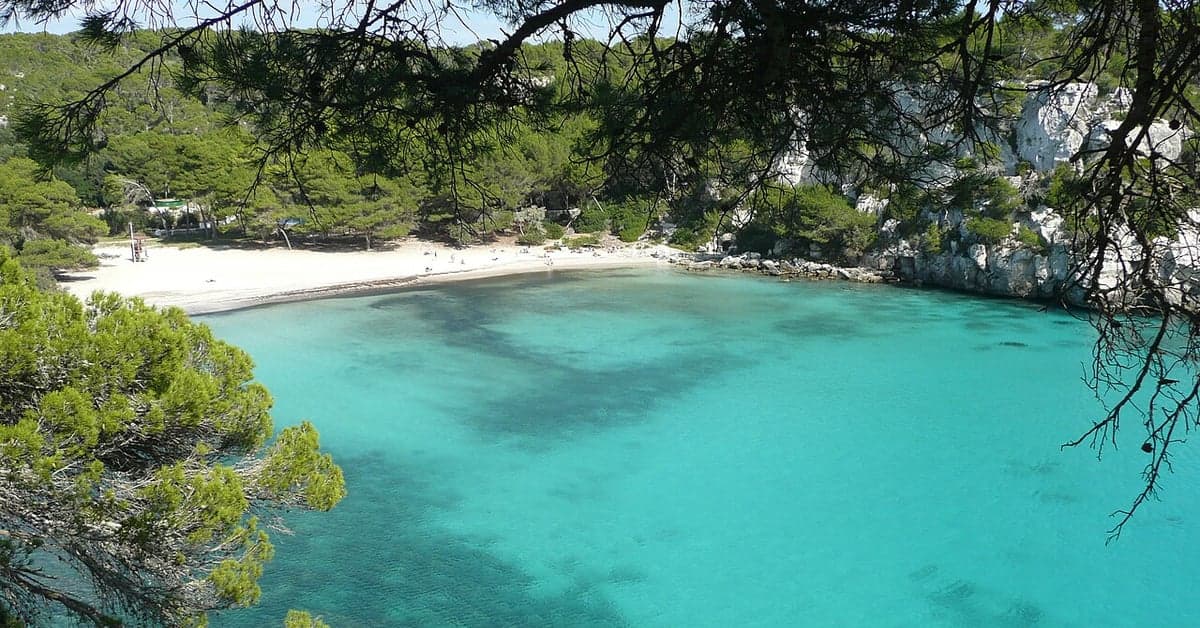
The property doesn't sit on a beach, but Menorca's south coast — where the best calas (coves) are — is 15-20 minutes by car. Cala Turqueta, Cala Macarella, and Son Saura are among the most beautiful beaches in the Mediterranean: white sand, turquoise water, pine forest backing. In June and September, you might have an entire cala to yourself before 10 AM. In August, arrive by 9 AM or you won't find space.
Menorca's airport receives direct flights from most European capitals in summer. The island has no high-rise hotels (building height is restricted by law) and received a UNESCO Biosphere Reserve designation in 1993, which has kept development in check. It operates at a different tempo than Mallorca or Ibiza — slower, quieter, and more focused on landscape than nightlife.
Booking Tips for European Boutique Hotels
- Book direct: Hotels under 50 rooms often offer better rates, room upgrades, or welcome amenities through their own websites. They pay 15-25% commission to OTAs, so they're motivated to reward direct bookings.
- Half-board value: At remote properties like Des Pecheurs or Fontenille, half-board (breakfast + dinner) is often the smartest option since off-site dining requires a car or boat. The supplement typically runs EUR 50-90/person/day.
- Shoulder season: June and September offer the best combination of weather, availability, and price across Southern Europe. July works too, at slightly higher rates. August is peak pricing and peak crowds everywhere on this list.
- Minimum stays: Many boutique properties enforce 3-to-7-night minimums in July-August. Check before booking a short stay.
Frequently Asked Questions
What makes a hotel boutique?
A genuine boutique hotel has under 50 rooms, is independently owned, and has a distinct design identity. It is not a rebranded chain property. The hotels on most curated lists cost under EUR 400/night and offer personal attention, architectural coherence, and a sense of place that large resorts cannot replicate.
What is the best boutique beach hotel in Europe?
It depends on your priorities. La Peschiera in Puglia (from EUR 280/night) occupies a converted 16th-century fish farm with natural rock pools. Lily of the Valley on the French Riviera (from EUR 300/night) is designed by Philippe Starck with a 2,000-square-meter spa. Son Brull in Mallorca (from EUR 250/night) is a restored 12th-century monastery.
Are boutique beach hotels in Europe expensive?
Quality boutique beach hotels in Southern Europe typically range from EUR 150-400/night for a standard double in high season. Memmo Baleeira in Sagres, Portugal starts at EUR 150/night in shoulder season. Booking direct often yields better rates, upgrades, or welcome amenities since hotels pay 15-25% commission to online booking platforms.
When is the best time to book boutique hotels in Europe?
June and September offer the best combination of weather, availability, and price across Southern Europe. July is slightly pricier. August is peak pricing and peak crowds everywhere. Many boutique properties enforce 3-7 night minimum stays in July-August.
What is the best beach hotel in Puglia Italy?
La Peschiera in Monopoli occupies a 16th-century fish farm on the Adriatic coast with 34 rooms, natural rock pools, and a seawater infinity pool. Rooms start at EUR 280/night. The restaurant serves burrata from nearby Andria and raw red prawns from Gallipoli. Monopoli's whitewashed old town is a 5-minute drive away.
Is Menorca better than Mallorca for beach hotels?
Menorca offers a quieter, less developed experience than Mallorca. Building height is restricted by law, and the island has UNESCO Biosphere Reserve status. Its south coast calas (Turqueta, Macarella, Son Saura) are among the Mediterranean's most beautiful. Boutique options like Fontenille Menorca start at EUR 250/night.